What Is Agentic AI? A Beginner's Guide to AI Agents
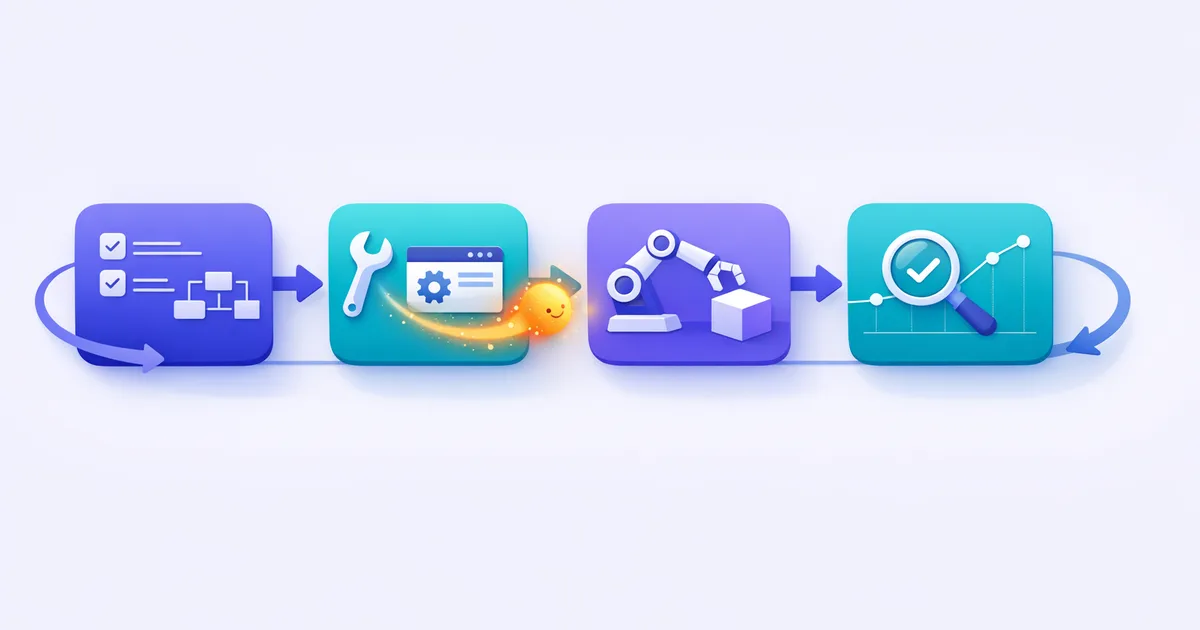
Agentic AI is software that pursues a goal on its own: it plans the steps, uses tools like search, code, or apps, takes actions, and checks its own work — with little human input. Unlike a chatbot that only replies, an AI agent decides what to do next and does it.
You’ve used AI that answers questions. Agentic AI is the next step: AI that does the task. Instead of typing a prompt and copying the reply, you hand it a goal — “book the cheapest flight that fits this calendar” or “find and fix the failing test” — and it works through the steps for you. This guide explains what that really means, how AI agents work under the hood, where they’re useful today, and where they still fall short. No hype, just a clear mental model you can use.
What “agentic AI” actually means
The word agentic comes from agent — something that acts on your behalf. So agentic AI is AI that takes actions toward a goal, not just AI that produces an answer. A travel agent doesn’t just tell you about flights; they book one. An AI agent works the same way: you give it an outcome, and it does the work to get there.
Industry analysts describe it the same way. Gartner defines agentic AI as systems that embed “autonomous, goal-driven behavior” to complete tasks on a user’s behalf, interpreting intent and taking multi-step actions without constant input (Gartner, 2025).
The key word is autonomy — the ability to make decisions and act without you approving every step. A chatbot has none: it waits for your next message. An agent has some: it can decide “I should search for that,” then search, read the result, and decide what to do next. How much autonomy you grant is up to you, and getting that balance right is the whole game.
Generative AI vs agentic AI: the real difference
This is the question most beginners get stuck on, so let’s be precise. Generative AI creates content — text, images, code — in response to a prompt, then stops. Agentic AI uses a generative model as its “brain” but wraps it in extra machinery: planning, tools, memory, and a loop that lets it act repeatedly until a goal is met.
In other words, agentic AI isn’t a different technology that replaces generative AI. It’s generative AI given hands, a to-do list, and a notepad.
| Generative AI (chatbot) | Agentic AI (AI agent) | |
|---|---|---|
| You give it | A prompt (a question) | A goal (an outcome) |
| It produces | One response, then waits | A sequence of actions |
| Decides next step? | No — you do | Yes — it does |
| Uses tools? | Only if you ask, one at a time | Yes, on its own (search, code, apps) |
| Remembers progress? | Limited to the chat | Tracks steps toward the goal |
| Example | ”Write me an email" | "Reply to my unread emails and flag the urgent ones” |
| Effort from you | High (you drive each step) | Lower (you review the result) |
A simple test for telling them apart:
- It stops and waits after one reply → it’s acting as generative AI.
- It keeps going — searching, deciding, acting — until the job is done → it’s acting as an agent.
- Same model, two modes → ChatGPT or Claude can do either, depending on how it’s set up.
How AI agents actually work: the agent loop
Under the hood, almost every AI agent runs a loop. It’s worth learning, because once you see it, agents stop feeling like magic. Here are the five stages:
- Perceive — The agent reads the goal you gave it and gathers the current state: your request, relevant files, the contents of a web page, the data in an app. This is its view of the world.
- Plan — Using its language model, it breaks the goal into smaller steps. “To answer this, I need to search, then read two sources, then compare them.” Planning is what separates an agent from a one-shot reply.
- Use tools — An agent can call tools: a web search, a code runner, a calculator, a database, or another app’s API (a way for programs to talk to each other). Tools let it do things its text brain can’t, like fetch live data or send a message.
- Act — It takes a concrete step: runs the search, writes the file, sends the email, clicks the button. This is the part that makes it agentic — real actions with real effects.
- Check and remember — It reviews the result (“did that search answer the question?”), stores what it learned, and decides whether to continue, retry, or stop. Then the loop repeats from step one with new information.
The agent cycles through this loop — perceive, plan, act, check — until it reaches the goal or hits a limit you set. Memory matters here: an agent that forgets what it already tried will loop forever or repeat mistakes.
Where memory and knowledge come in
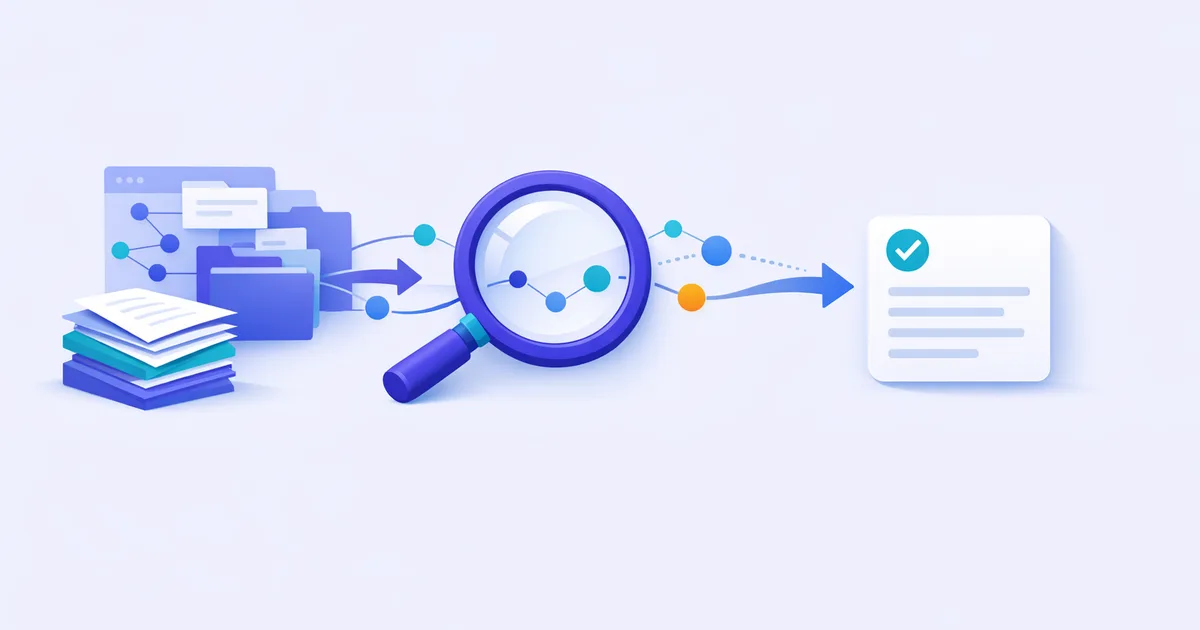
Agents often need facts they weren’t trained on — your company docs, this week’s prices, a product manual. A common method is retrieval-augmented generation (RAG), where the agent looks up relevant documents and feeds them into the model before answering. If that term is new, our explainer on what RAG is breaks it down in plain English. RAG is what lets an agent reason over your information instead of only its general training.
To act on outside tools and data (not just read them), agents increasingly use a shared standard called the Model Context Protocol — see what MCP is — which lets one agent plug into many services through a common interface instead of a custom integration each time.
Real examples of agentic AI today
Agents aren’t a future promise — they’re already doing narrow jobs in production. Here are the most common categories, with honest notes on how well they work.
| Use case | What the agent does | Maturity today |
|---|---|---|
| Customer service | Reads a ticket, looks up the account, answers or escalates | Strong for common questions |
| Coding | Reads a codebase, edits files, runs tests, fixes errors | Strong for well-defined tasks |
| Research | Searches the web, reads sources, writes a cited summary | Good; needs fact-checking |
| Workflow automation | Moves data between apps, drafts replies, files records | Good for repetitive flows |
| Computer/browser use | Navigates websites and apps like a person would | Early; brittle on complex sites |
| Personal assistant | Manages calendar, email, bookings end to end | Early; needs tight permissions |
A concrete one: Salesforce reported that within six months of launch, its Agentforce customer-service agents handled more than 500,000 conversations and resolved over 84% of questions, with only about 4% handed off to a human (Salesforce, 2025). That’s a real agentic system doing real work — within a narrow, well-defined domain.
On the coding side, tools that read your whole project, plan an edit, change multiple files, and run the tests are squarely agentic. If you build software, our guide to the best AI for coding compares the leading agent-style tools. And for general tasks, browser-using agents like Manus AI show both the promise and the rough edges of agents that operate a computer the way you would.
Where agentic AI is headed
Adoption is real but early. In McKinsey’s 2025 global survey of nearly 2,000 respondents, 23% of organizations said they were scaling an agentic AI system somewhere in the business, and another 39% were experimenting — yet in any given function, no more than 10% had scaled agents (McKinsey, 2025). Lots of pilots, far fewer in full production.
Vendors are betting big. Gartner predicts that 40% of enterprise applications will include task-specific AI agents by the end of 2026, up from less than 5% in 2025 (Gartner, 2025).
The same analysts add a reality check: Gartner expects over 40% of agentic AI projects to be canceled by the end of 2027, citing unclear value, rising costs, and weak risk controls (Gartner, 2025). The honest read: agents are genuinely useful for narrow, repeatable tasks, but many teams overestimate what today’s agents can reliably handle.
Risks and limits to know
Because agents act, their mistakes cost more than a chatbot’s wrong answer. Keep these in mind:
- Errors compound. A small mistake early in the loop can snowball. If step two is wrong, steps three through ten build on bad information.
- Hallucinations don’t go away. The underlying model can still state false things confidently. An agent that “decides” based on a made-up fact will act on it.
- Real-world consequences. An agent can send the wrong email, overwrite a file, or spend money. Reversible, low-stakes tasks first.
- Permissions and security. An agent with broad access to your apps is a bigger target. Give each agent the narrowest access it needs to do its job.
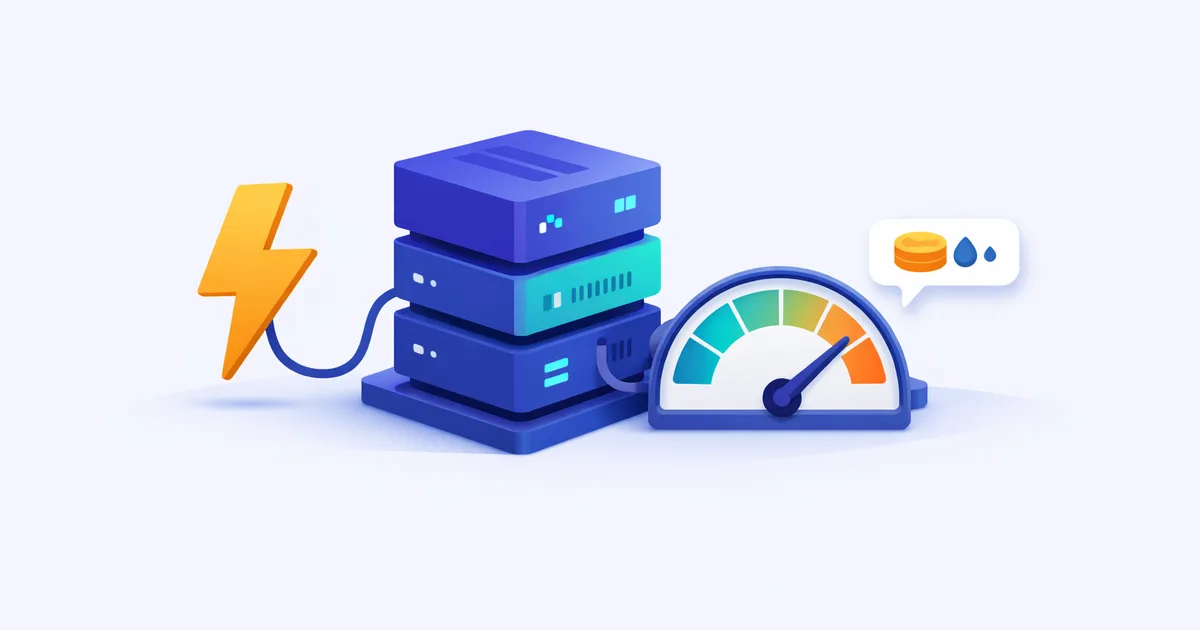
- Cost and loops. Agents that plan and retry can run up usage costs or get stuck repeating steps. Set limits on time, steps, and spend.
- Oversight still required. Treat an agent like a capable but junior assistant: useful, fast, and in need of review on anything that matters.
The pattern that works: narrow goal, narrow permissions, a human checking the result. Autonomy is a dial, not a switch — turn it up only as trust is earned.
How to start with agentic AI
You don’t need to be a developer, and you shouldn’t start by building anything complicated. Work through these steps:
- Use an agent before building one. Try a tool that already acts agentically — a coding assistant that runs tasks, or a research agent — and watch how it plans and acts. Seeing the loop in action teaches more than any article.
- Pick one small, reversible task. Something low-stakes where a mistake is easy to undo: drafting replies, sorting files, summarizing a folder of documents.
- Build a simple agent with no-code tools. A visual tool like n8n lets you connect an AI model to your apps and create a working agent without writing code. Our walkthrough on how to build an AI agent with n8n takes you from zero to a running agent.
- Keep a human in the loop. Start with agents that propose actions for you to approve, then loosen the leash only once they’ve proven reliable on real work.
- Review and expand. If the agent reliably saves time on one task, add another. If it doesn’t, adjust the goal or the tools — the cost of experimenting is low.
This is the same loop the agents use, applied to you: try one thing, check the result, and build on what works.
The bottom line
Agentic AI is a meaningful shift in how we use AI — from asking for answers to delegating tasks. But it’s an evolution of generative AI, not a separate magic technology: a model given tools, a plan, and the ability to act in a loop. It’s already strong at narrow, well-defined jobs like customer service and coding, still rough at open-ended ones, and most useful when you keep goals tight and a human in the loop.
The best way to understand agents is to use one and then build a small one yourself. Start with a low-stakes task, watch the loop, and expand from there.
Want the fundamentals in order? Start at our learn hub, then dig into RAG and building an agent in n8n. New guides land regularly — subscribe to get the next one in your inbox.
Frequently asked questions
What is agentic AI in simple terms?
Agentic AI is software you give a goal to, not just a question. It figures out the steps on its own, uses tools like search or apps to get them done, takes actions, and checks the result. A chatbot answers; an agent acts.
What is the difference between generative AI and agentic AI?
Generative AI creates content (text, images, code) in response to a prompt and then stops. Agentic AI uses that same generative model as a brain, but adds planning, tools, memory, and the ability to take repeated actions toward a goal without being prompted at each step.
Is ChatGPT an AI agent?
Plain ChatGPT in a chat window is generative AI — it replies and waits. But when it browses the web, runs code, or operates apps to complete a multi-step task on its own, it is acting as an agent. The same model can do both, depending on how it is set up.
How do AI agents actually work?
Most follow a loop: perceive (read the goal and current state), plan (break it into steps), use tools (search, code, APIs, apps), act (take a step), then check and remember (review the result and adjust). It repeats until the goal is met or it gives up.
What are real examples of agentic AI?
Customer-service agents that resolve tickets end to end, coding agents that edit files and run tests, research agents that gather and summarize sources, and workflow agents built in tools like n8n that move data between apps. Browser-using agents like Manus also fit here.
Are AI agents safe to use?
They can be, with limits. Because agents take actions, mistakes have real consequences — wrong emails sent, bad data written, money spent. Keep a human in the loop for anything risky, give agents narrow permissions, and start with low-stakes, reversible tasks.
Can AI agents replace jobs?
Today they mostly handle narrow, repetitive tasks rather than whole jobs. They still need oversight and fail in unfamiliar situations. The realistic near-term effect is removing routine steps, not replacing the judgment, accountability, and relationships people bring.
What tools do I need to build an AI agent?
Beginners often start with a no-code automation tool such as n8n, which connects an AI model to apps and lets you build an agent visually. Developers may use frameworks like LangChain or coding agents. You do not need to train your own model — you connect to an existing one.
What is the difference between an AI agent and automation like Zapier?
Classic automation follows fixed rules you write (if this, then that). An AI agent decides what to do based on the goal and the situation, can handle inputs it has not seen before, and adapts its plan. Many modern tools now blend both.
How do I start learning about agentic AI?
Begin by using an agent-capable tool for a small, low-risk task and watch how it plans and acts. Then build a simple agent in a no-code tool to see the loop firsthand. Our /learn/ hub walks through the fundamentals step by step.
Keep reading

Get good at AI — one practical email a week.
Tools, use cases, and shortcuts you can actually apply. No hype.